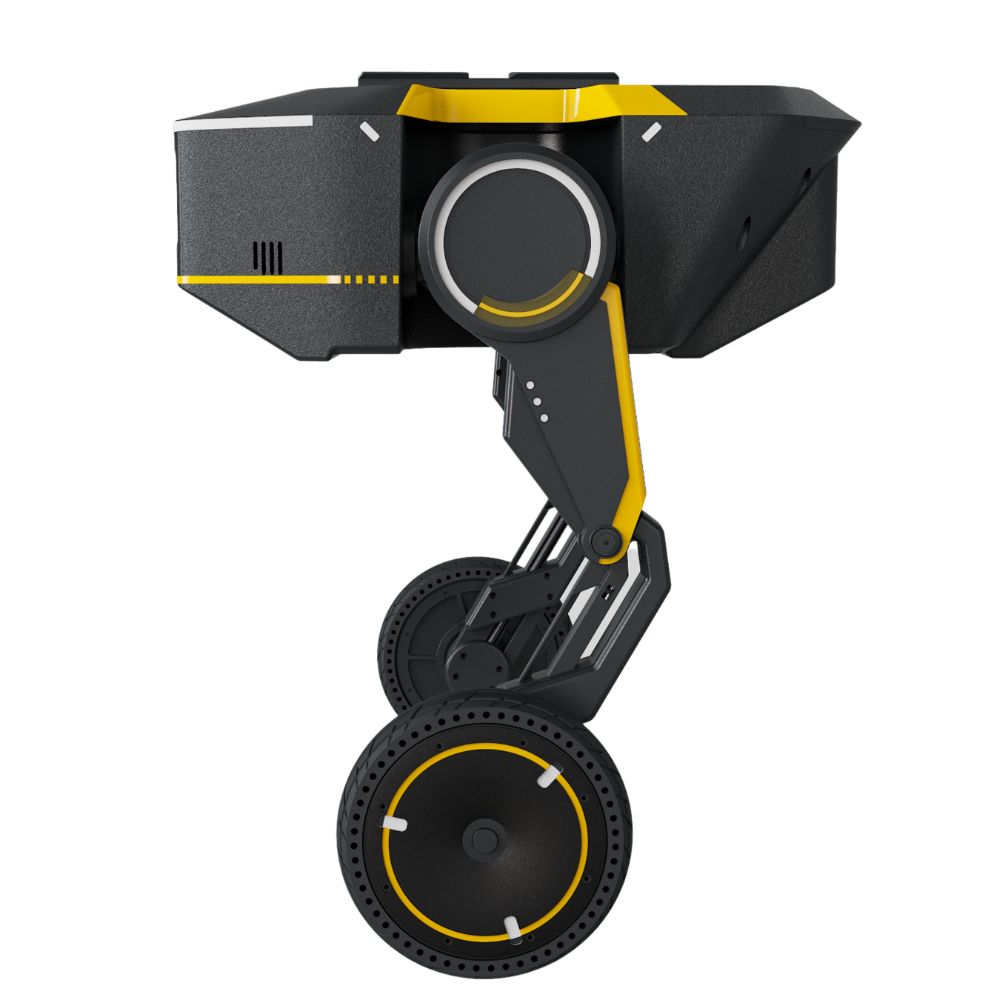
Getting started with TITA Robot development becomes much easier when developers follow structured documentation instead of learning through trial and error. Most robotics projects combine hardware setup, operating system configuration, ROS packages, sensors, navigation, and application software. According to the 2024 ROS Metrics Report, ROS packages have been downloaded billions of times, showing how strongly developers depend on standardized resources. TITA tutorials shorten setup time, reduce repeated configuration work, and provide examples that can be adapted for education, research, warehouse automation, inspection, and mobile robot applications.
Building a mobile robot usually starts with understanding the hardware before installing software. A developer should know the onboard computer, motor controller, battery system, communication ports, and supported sensors before writing the first application. Many robotics teams report that hardware configuration accounts for nearly 30% of the initial deployment process, making good documentation just as important as programming skills.
That hardware knowledge naturally leads to software installation. Most TITA development guides explain Linux setup, ROS or ROS 2 installation, package dependencies, network configuration, and driver installation in a logical order. Following documented steps helps reduce version conflicts that often appear when different libraries are installed manually. Since ROS 2 distributions continue receiving long-term support, developers also benefit from better package compatibility across multiple releases.
Documentation is most useful when every step can be repeated on another computer without changing the workflow. Teams working with shared repositories often save many hours simply by using the same installation process.
After the operating environment is ready, communication between the robot and the development computer becomes the next task. Ethernet, Wi-Fi, and SSH are commonly used for remote access, software deployment, and log collection. Many robotics laboratories maintain several robots at once, so remote management reduces unnecessary physical access while making software updates easier to organize.
The next stage focuses on robot movement. Tutorials normally explain velocity commands, wheel odometry, encoder feedback, motion parameters, and safety limits before introducing autonomous navigation. Developers who understand these basic functions usually spend less time adjusting navigation behavior after deployment because movement data remains more consistent throughout testing.
Sensor integration expands what the robot can understand about its surroundings. A typical development platform may combine LiDAR, RGB cameras, depth cameras, IMUs, ultrasonic sensors, and GPS receivers. Modern SLAM systems often merge information from multiple sensors, and published navigation studies have shown that sensor fusion can improve localization accuracy by more than 20% compared with using only a single sensor in many indoor environments.
The information collected by sensors becomes useful after mapping and localization are configured. Most learning resources explain map creation, occupancy grids, localization algorithms, waypoint planning, obstacle avoidance, and path execution. Developers usually test these functions in simulation before moving to physical robots, reducing unnecessary hardware wear while allowing software updates to be verified much faster.
For developers looking for additional learning materials, Direct Drive TITA tutorials provide video demonstrations alongside written documentation. Combining visual examples with technical references helps new users compare configuration steps with actual robot behavior instead of relying only on screenshots.
Artificial intelligence is now included in many robotics projects. Object detection, image classification, semantic segmentation, and pose estimation are commonly built with frameworks such as PyTorch or TensorFlow before being integrated into ROS nodes. According to the 2025 Stack Overflow Developer Survey, Python remained one of the most widely used programming languages, making it a practical choice for many AI robotics applications.
| Development Area | Typical Learning Content | Common Result |
|---|---|---|
| System Setup | Linux, ROS, drivers | Stable development environment |
| Motion Control | Velocity, odometry, controllers | Reliable robot movement |
| Navigation | Mapping, localization, planning | Autonomous navigation |
| AI Functions | Vision, detection, inference | Intelligent robot behavior |
API documentation also deserves attention because it explains available interfaces, message formats, parameters, and supported functions. Instead of modifying system files, developers can build applications through documented APIs, making later software updates easier to manage. Many open-source robotics projects follow this approach because it allows different software modules to remain compatible even after several updates.
As projects become larger, debugging receives more attention than installation. Log files, diagnostic tools, sensor status reports, and communication monitoring help identify configuration problems before they affect navigation or perception. In software engineering studies published since 2023, automated logging and standardized diagnostics have continued to reduce maintenance time across distributed robotic systems.
Community resources add another layer of support. Git repositories, discussion forums, issue trackers, and shared examples allow developers to compare different implementation methods and learn from existing projects. Universities, research groups, and commercial developers often contribute improvements that benefit later users, making the documentation grow alongside the software itself. For anyone beginning with TITA Robot, following structured tutorials, reviewing API references, testing in simulation, and gradually moving toward physical deployment provides a practical learning path that supports both small prototypes and larger robotics applications.